



Abstract
Background:Cognitive dysfunction is a significant health challenge in the global elderly population, and its prevalence is associated with multiple factors, including modifiable lifestyle factors. The relationship between nighttime fasting duration, a potential lifestyle factor, and cognitive function has yet to be thoroughly investigated.
Objective:To investigate the association between nighttime fasting duration and cognitive function.
Methods:This cross-sectional study was based on data from the National Health and Nutrition Examination Survey (NHANES) from 2011 to 2014. Weighted multiple linear regression was utilized to examine the relationship between nighttime fasting duration and cognitive function, with additional curve fitting and inflection point analysis conducted to further elucidate this association
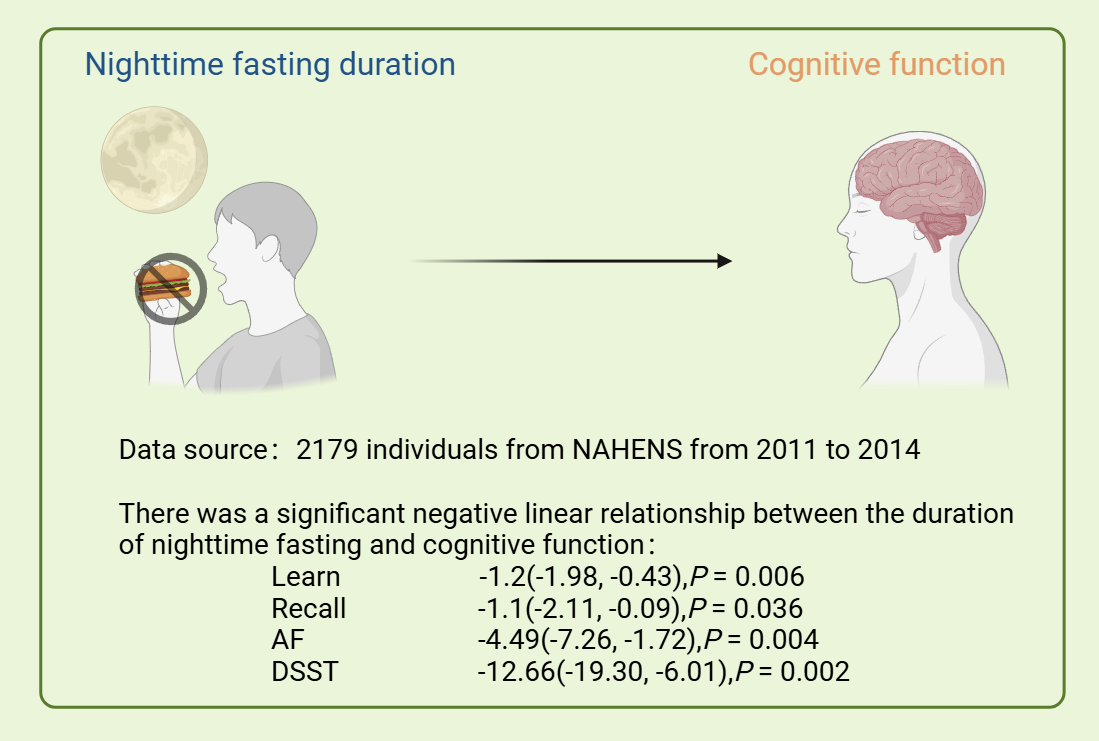
Results:There was a significant negative linear relationship between nighttime fasting duration and cognitive function (Learn: β = -1.2, 95% CI: -1.98, -0.43, P = 0.006; Recall: β = -1.1, 95% CI: -2.11, -0.09, P = 0.036; Animal Fluency: β = -4.49, 95% CI: -7.26, -1.72, P = 0.004; Digit Symbol Substitution Test: β = -12.66, 95% CI: -19.30, -6.01, P = 0.002). Subgroup analyses showed that this negative correlation was prevalent in most subgroups. Curve fitting revealed a linear relationship between nighttime fasting duration and cognitive function scores, but did not identify a significant inflection point.
Conclusions:Longer nighttime fasting times may be associated with cognitive decline, either as a continuous or categorical variable.
Keywords:Cognitive Function; Nighttime Fasting Duration; US National Health and Nutrition Examination Survey
Introduction
Cognitive dysfunction refers to a range of impairments in cognitive processes, including declines in memory, attention, executive function, language, and visuospatial abilities [1,2] . As the global population ages, the prevalence of cognitive dysfunction is increasing and has become a significant public health problem. It is estimated that tens of millions of people worldwide are affected by varying degrees of cognitive dysfunction, and this number is expected to grow significantly in the coming decades [3] . Cognitive dysfunction not only has a profound impact on an individual's quality of life but also places a heavy economic burden on families and society [4,5] .
Recent studies have shown that lifestyle, especially dietary habits, may be associated with maintaining and declining cognitive function [6] . The duration of overnight fasting (DNF)—the time interval from the last meal of the day to the first meal of the next—has been proposed as a factor that may affect cognitive function [7,8] . Prolonged nocturnal fasting duration has been associated with various metabolic and cardiovascular health benefits [9,10] ; however, its effect on cognitive function is largely unclear.
In diseases similar to cognitive dysfunction, such as Alzheimer's disease and Parkinson's disease, it has been shown that nocturnal fasting duration, or its associated intermittent fasting pattern, may positively affect the disease process [11,12] . For instance, in animal models, intermittent fasting enhances the brain's metabolic health, decreases neuroinflammation, and may decelerate cognitive decline [13,14] . However, most of these studies have focused on animal experiments, with relatively limited evidence from human studies.
In light of this, this study investigated the relationship between nighttime fasting duration and cognitive dysfunction. We utilized data from the National Health and Nutrition Examination Survey (NHANES) to assess participants' cognitive functioning through objective tests. We examined the possible effects of nighttime fasting duration on it. In addition, we considered a range of potential confounders to obtain more accurate conclusions. The findings of this study are expected to provide new perspectives on the prevention and intervention of cognitive dysfunction and provide guidance for future research and public health practice.
Materials and Methods
Study sample
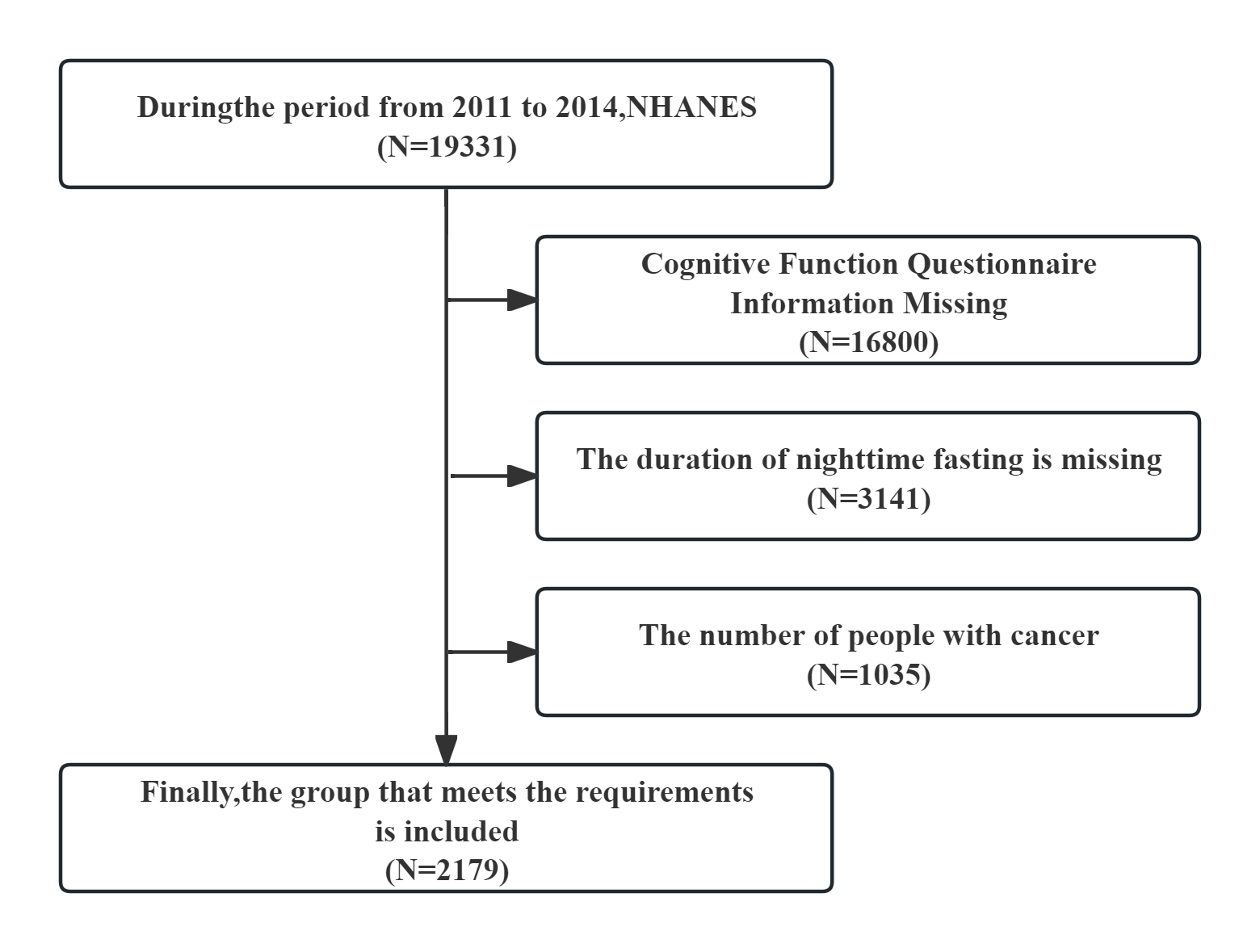
NHANES (https://www.cdc.gov/nchs/nhanes/index.htm, accessed on 11 September 2024) was conducted between 2011 and 2014, and 19,331 participants participated. In this study, however, data from 17,152 participants were excluded, mainly due to missing data on the length of nighttime fasting, incomplete data on cognitive functioning scores, or participants being diagnosed with cancer (Figure 1).
Figure 1 The flow chart of participant selection.
Cognitive function
In this study, participants' global and domain-specific cognitive functions were assessed by four standardized tests: the immediate recall (CERAD-WL) and delayed recall (CERAD-DR) tests were used to assess immediate and delayed recall of new information [15,16] ; the Animal Fluency test (AF) assessed verbal fluency [17,18] ; and the Digit Symbol Substitution Test (DSST) measures executive function and processing speed [19] . These tests have been validated to effectively differentiate between cognitively impaired and normal individuals [20] . The higher the test score, the better the cognitive function. The results of all tests were standardized to calculate an overall cognitive composite score in a manner consistent with previous studies [21-24] .
Duration of nighttime fasting (DNF)
Two 24-hour dietary recalls were used in this study to assess participants' dietary intake. The first dietary recall was completed through a face-to-face interview, and the second was conducted by telephone 3 to 10 days later. Participants were asked to record the duration of each food and beverage intake. Frequency of eating was defined as the point in time at which calorie-containing foods or drinks were ingested, with 50 kCal as the minimum standard for a single eating behavior [25,26] . DNF was calculated using the following formula: 24 hours − (time of last meal − time of first meal). For example, if a person eats breakfast at 7 a.m. and dinner at 6 p.m., his or her DNF is 13 hours [26,27] .
Assessment of confounders
This study corrected for a range of potential confounders to more accurately assess the relationship between nighttime fasting and cognitive function. These factors included age (years), gender (male/female), race (non-Hispanic white, non-Hispanic black, Mexican American, and other), education level (less than high school, high school, and more than high school), household income-to-poverty ratio (PIR: <1.5, 1.5–3.5, >3.5), marital status (partnered/unpartnered), and smoking habits (yes: total cigarettes >100 cigarettes; No: ≤100 cigarettes), drinking behavior (Yes: alcohol consumption ≥12 drinks per year; No: <12 drinks), body mass index (BMI: <25 kg/m², 25–30 kg/m², >30 kg/m²), sleep duration (hours), systemic immune index (SII) and systemic inflammatory response index (SIRI). Diabetic status (yes/no) was also taken into account [28] . SII was calculated as platelet count × neutrophil count/lymphocyte count [29] . SIRI was calculated as neutrophil count × monocyte count/lymphocyte count [30] .
Statistical analysis
In this study, continuous variables were expressed as mean ± standard error, and differences between groups were assessed by weighted t-test; categorical variables were presented as frequency (N) and percentage (%) and analyzed by chi-square test. To improve the reliability of statistical analyses, the study merged the NHANES datasets of the two cycles and applied weighted analyses by applying the mobile check center sample weights (WTINT2YR/2), as described in the CDC's NHANES tutorial.
Weighted multiple linear regression models were used to analyze the linear relationship between nighttime fasting duration and cognitive function scores, and the non-linear relationship was assessed by smoothed curve fitting and threshold effects. Three models were constructed for the study: the uncorrected model was not adjusted for any variables; model 1 was adjusted for age, gender, ethnicity, education level, marital status, and household income-to-poverty ratio; and model 2 was further adjusted for body mass index, cigarette smoking, alcohol consumption, diabetes mellitus, sleep duration, systemic inflammatory response index, and systemic immune-inflammatory index.
Indicators of effect sizes were regression coefficients (Beta) and their 95% confidence intervals (CI), with a statistical significance level of two-sided P < 0.05. All statistical analyses were completed using SAS 9.4 and R 4.2.0 software, and records containing missing data were deleted.
Results
Baseline characteristics
This study included 2179 subjects with a mean age of 68.52 years, of which 54.15% were female and 45.85% were male. DNF (duration of nightly fasting) quartile subgroups were statistically different from race, education level, marital status, and household income to poverty ratio; however, smoking, alcohol consumption, body mass index, diabetes mellitus, sleep duration, systemic inflammatory response index (SIRI) and Systemic Immune Inflammatory Index (SII) did not show statistical differences between DNF quartile subgroups. Subjects with longer nighttime fasting duration performed lower on cognitive function scores (Table 1).
|
Table 1 Characteristics of the study population [M (P25, P75), n(%)] |
|||||||
|
DNF |
Total |
Q1[0,0.47) |
Q2[0.47,0.53) |
Q3[0.53,0.60) |
Q4(≥0.60) |
F/H/X2 |
P value |
|
|
(n=2179) |
(n = 540) |
(n = 491) |
(n = 601) |
(n = 547) |
|
|
|
Weighted |
41758460.91 |
11725810.5 |
9757617.307 |
1471117.255 |
8803915.848 |
|
|
|
DNF |
0.5 ± 0.1 |
0.4 ± 0.1 |
0.5 ± 0.0 |
0.6 ± 0.0 |
0.7 ± 0.1 |
2468.265 |
< 0.001 |
|
Age (years) |
68.8 ± 6.6 |
67.9 ± 6.5 |
68.9 ± 6.5 |
69.5 ± 6.8 |
68.9 ± 6.6 |
6.083 |
< 0.001 |
|
Gender |
|
|
|
|
|
9.833 |
0.02 |
|
Male |
1069 (49.1) |
292 (54.1) |
244 (49.7) |
270 (44.9) |
263 (48.1) |
|
|
|
Female |
1110 (50.9) |
248 (45.9) |
247 (50.3) |
331 (55.1) |
284 (51.9) |
|
|
|
Race |
|
|
|
|
|
57.607 |
< 0.001 |
|
Non-Hispanic White |
208 ( 9.5) |
44 (8.1) |
41 (8.4) |
58 (9.7) |
65 (11.9) |
|
|
|
Non-Hispanic Black |
960 (44.1) |
264 (48.9) |
234 (47.7) |
277 (46.1) |
185 (33.8) |
|
|
|
Mexican American |
558 (25.6) |
115 (21.3) |
97 (19.8) |
154 (25.6) |
192 (35.1) |
|
|
|
Other Race |
453 (20.8) |
117 (21.7) |
119 (24.2) |
112 (18.6) |
105 (19.2) |
|
|
|
Educational Attainment |
|
|
|
|
|
43.696 |
< 0.001 |
|
Less than High School |
588 (27.0) |
114 (21.2) |
114 (23.2) |
167 (27.8) |
193 (35.3) |
|
|
|
High School |
521 (23.9) |
121 (22.5) |
110 (22.4) |
156 (26) |
134 (24.5) |
|
|
|
High School or above |
1068 (49.1) |
303 (56.3) |
267 (54.4) |
278 (46.3) |
220 (40.2) |
|
|
|
Marital Status |
|
|
|
|
|
9.561 |
0.023 |
|
Partner |
1239 (56.9) |
316 (58.5) |
294 (60) |
348 (57.9) |
281 (51.4) |
|
|
|
Unpartnered |
939 (43.1) |
224 (41.5) |
196 (40) |
253 (42.1) |
266 (48.6) |
|
|
|
HIPR |
|
|
|
|
|
46.131 |
< 0.001 |
|
<1.5 |
726 (36.2) |
147 (30.2) |
148 (32.2) |
206 (36.9) |
225 (45) |
|
|
|
1.5-3.5 |
666 (33.2) |
147 (30.2) |
170 (37) |
183 (32.7) |
166 (33.2) |
|
|
|
>3.5 |
613 (30.6) |
192 (39.5) |
142 (30.9) |
170 (30.4) |
109 (21.8) |
|
|
|
Alcohol consumption |
|
|
|
|
|
5.035 |
0.169 |
|
Yes |
1469 (68.0) |
378 (70.5) |
343 (70.1) |
394 (66) |
354 (65.7) |
|
|
|
No |
692 (32.0) |
158 (29.5) |
146 (29.9) |
203 (34) |
185 (34.3) |
|
|
|
Smoking |
|
|
|
|
|
1.274 |
0.735 |
|
Yes |
1088 (50.0) |
278 (51.6) |
240 (48.9) |
293 (48.8) |
277 (50.7) |
|
|
|
No |
1089 (50.0) |
261 (48.4) |
251 (51.1) |
308 (51.2) |
269 (49.3) |
|
|
|
BMI (kg/m2) |
|
|
|
|
|
5.445 |
0.488 |
|
<25 |
565 (26.3) |
130 (24.3) |
139 (28.5) |
161 (27.2) |
135 (25.1) |
|
|
|
25-30 |
760 (35.3) |
203 (37.9) |
160 (32.9) |
213 (36) |
184 (34.3) |
|
|
|
>30 |
826 (38.4) |
202 (37.8) |
188 (38.6) |
218 (36.8) |
218 (40.6) |
|
|
|
Diabetes |
|
|
|
|
|
2.517 |
0.472 |
|
Yes |
504 (24.3) |
136 (26.5) |
108 (22.8) |
142 (24.8) |
118 (22.9) |
|
|
|
No |
1571 (75.7) |
378 (73.5) |
365 (77.2) |
430 (75.2) |
398 (77.1) |
|
|
|
Sleep duration (h) |
7.0(6.0,8.0) |
7.0(6.0,8.0) |
7.0(6.0, 8.0) |
7.0(6.0, 8.0) |
7.0(6.0,8.0) |
14.414 |
0.002 |
|
SIRI |
1.1(0.8,1.6) |
1.1(0.8,1.7) |
1.1(0.8, 1.6) |
1.1(0.7, 1.6) |
1.1(0.7, 1.6) |
6.764 |
0.08 |
|
SII |
444.6 (314.7, 637.5) |
453.6 (333.4, 642.5) |
459.5 (331.3, 663.3) |
436.6 (300.2, 623.8) |
437.5 (297.5, 628.6) |
6.878 |
0.076 |
|
Learn |
6.3(5.3,7.3) |
6.7(5.7,7.7) |
6.3(5.3, 7.3) |
6.3(5.3, 7.3) |
6.3(5.0, 7.3) |
26.705 |
< 0.001 |
|
Recall |
6.0(4.0,8.0) |
6.0(5.0,8.0) |
6.0(5.0, 8.0) |
6.0(5.0, 7.0) |
6.0(4.0, 7.0) |
18.971 |
< 0.001 |
|
Animal fluency |
16.0(13.0, 20.0) |
17.0(13.0, 21.0) |
17.0(13.0, 20.0) |
16.0(13.0, 19.0) |
15.0(12.0, 19.0) |
28.37 |
< 0.001 |
|
Digit Symbol Substitution Test |
46.0(33.0, 58.0) |
50.0(38.0, 62.0) |
47.0(34.5, 59.0) |
45.0(33.0, 57.0) |
42.0(28.0, 54.0) |
59.009 |
< 0.001 |
|
Year of inclusion |
|
|
|
|
|
6.455 |
0.091 |
|
2011-2012 |
1045 (48.0) |
239 (44.3) |
250 (50.9) |
302 (50.2) |
254 (46.4) |
|
|
|
2013-2014 |
1134 (52.0) |
301 (55.7) |
241 (49.1) |
299 (49.8) |
293 (53.6) |
|
|
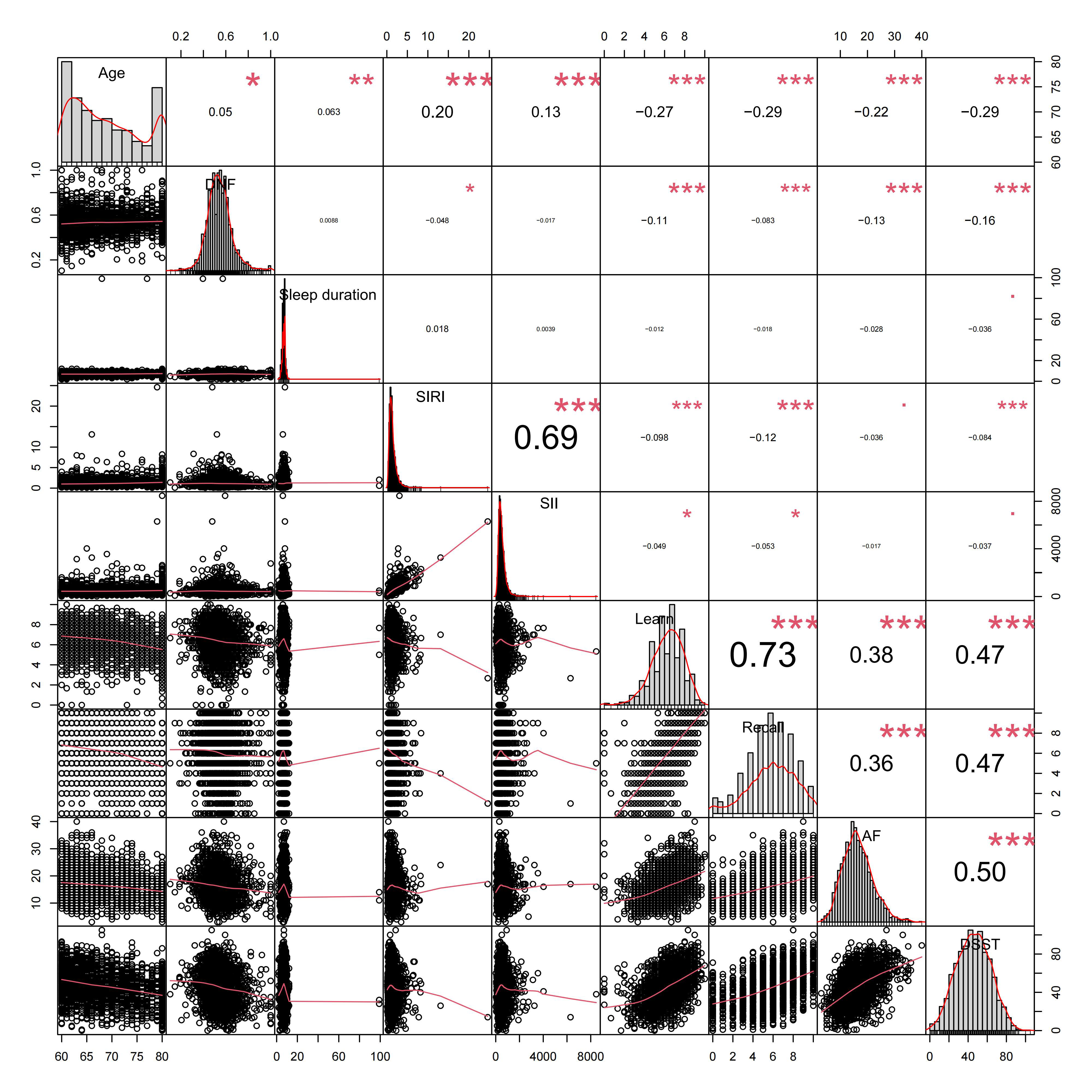
Further analyses of the correlations between age, DNF, sleep duration, SIRI, SII and cognitive function-related scores (learn, recall, Animal fluency and Digit Symbol Substitution Test) showed that age and DNF were negatively and statistically significant correlations with cognitive function scores, while the correlation between sleep duration and cognitive function scores was not statistically significant. The correlation between SIRI and cognitive function scores was statistically more important compared to SII (Figure 2).
Figure 2 Correlation and Scatterplot Matrix of Key Variables.
Association between DNF and cognitive functioning
DNF and cognition Specifically, individuals with longer nighttime fasting durations had better performance on learning [learn:β=-1.2,95% CI:-1.98] and recall tasks [Recall:β=-1.1,95% CI:-2.11] , Animal fluency [AF:β=-4.49,95% CI:-7.26] and poor performance on the Digit Symbol Substitution Test [DSST:β=-12.66,95% CI:-19.30] . This association was also present when DNF was converted to quartile categorical variables (Figure 3). In addition, the results of the primary analysis were further validated by the three-dimensional distribution plots of cognitive function, nighttime fasting duration, and age (Figure 4).
Figure 3 Primary analysis forest map.
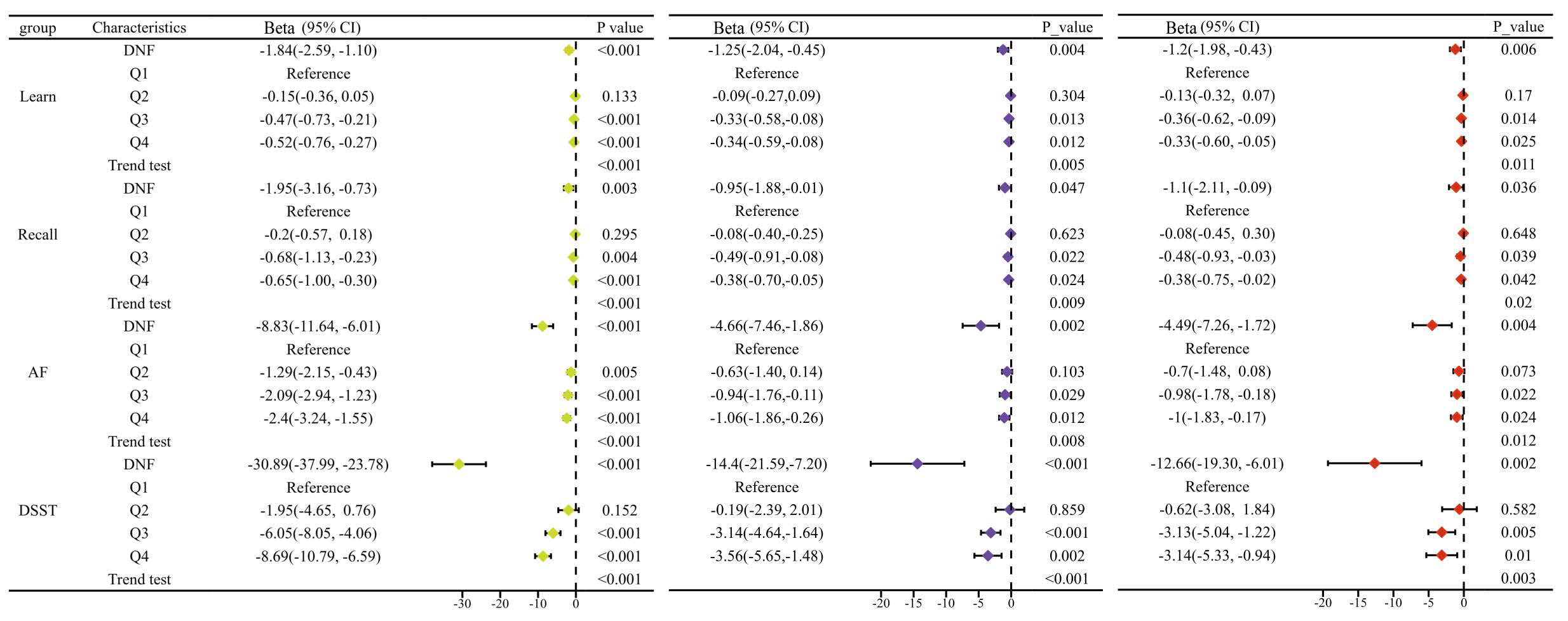
Figure4 3D distribution diagram.
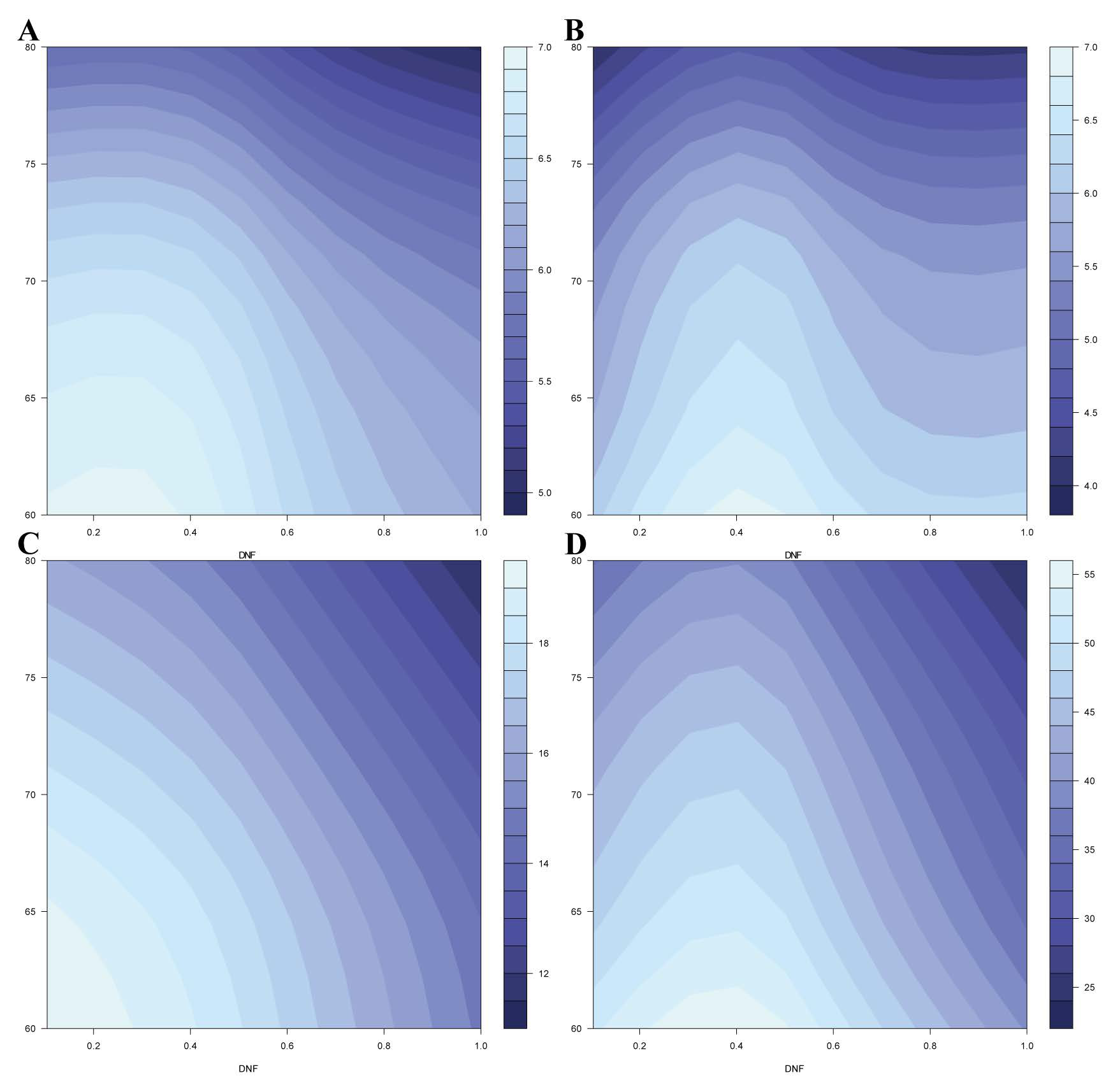
Uncorrected models did not adjust for any variables; model 1 adjusted for age, sex, race, education level, marital status, and household income to poverty ratio; model 2 further adjusted for body mass index, smoking, alcohol consumption, diabetes, sleep duration, systemic inflammatory response index, and systemic immune inflammation index.
Subgroup analyses
In the subgroup analyses, negative correlations between DNF and cognitive function were significant in most subgroups. There was a significant interaction between smoking status and the effect of DNF on learning ability; ethnicity interacted significantly with the impact of DNF on recall and DSST, and diabetes status interacted considerably with the effects of DNF on AF (Figure 5).
Figure 5. Subgroup analysis forest plot.
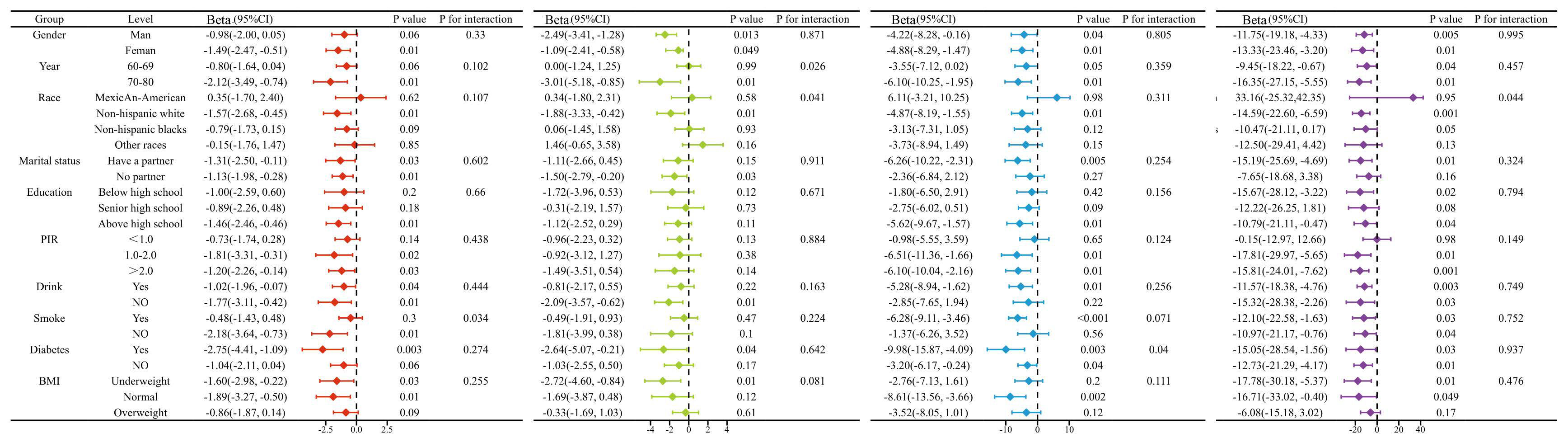
Red indicates the effect of DNF on learning ability; Green indicates the impact of DNF on recall ability; Blue indicates the influence of DNF on AF; Purple indicates the effects of DNF on DSST.
Curve Fitting of DNF and Cognitive Functioning
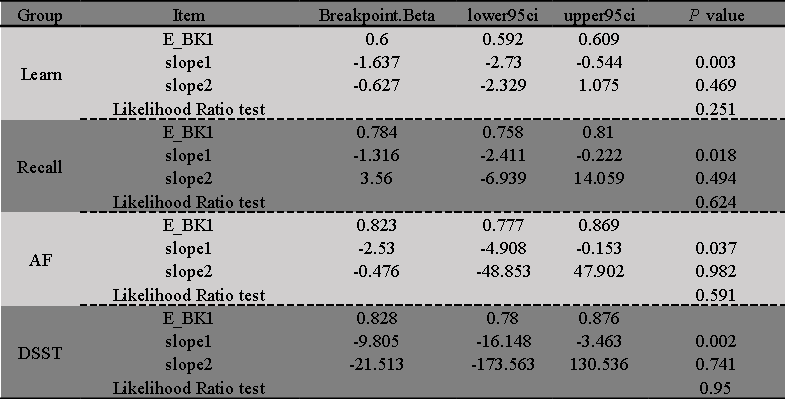
After adjusting for the covariates in Model 3, a two-stage linear regression model was used to curve-fit the relationship between DNF and cognitive function. The results showed that DNF was negatively and linearly related to learning ability (PNonliner = 0.342), recall ability (PNonliner = 0.479), motor fluency (PNonliner = 0.601), and Digit Symbol Substitution Test (PNonliner =0.973) (Figure 6). The inflection point analysis failed to identify a valid inflection point that would allow the relationship between DNF and cognitive function to be segmented into two statistically significant phases.
Figure 6 Employed weighted multi-model linear regression to analyze the curve fitting between nighttime fasting duration and cognitive function scores.(A)Curve fitting of DNF with learning scores. (B) Curve fitting of DNF with recall scores. (C) Curve fitting of DNF with Animal Fluency. (D) Curve fitting of DNF with Digit Symbol Substitution test.
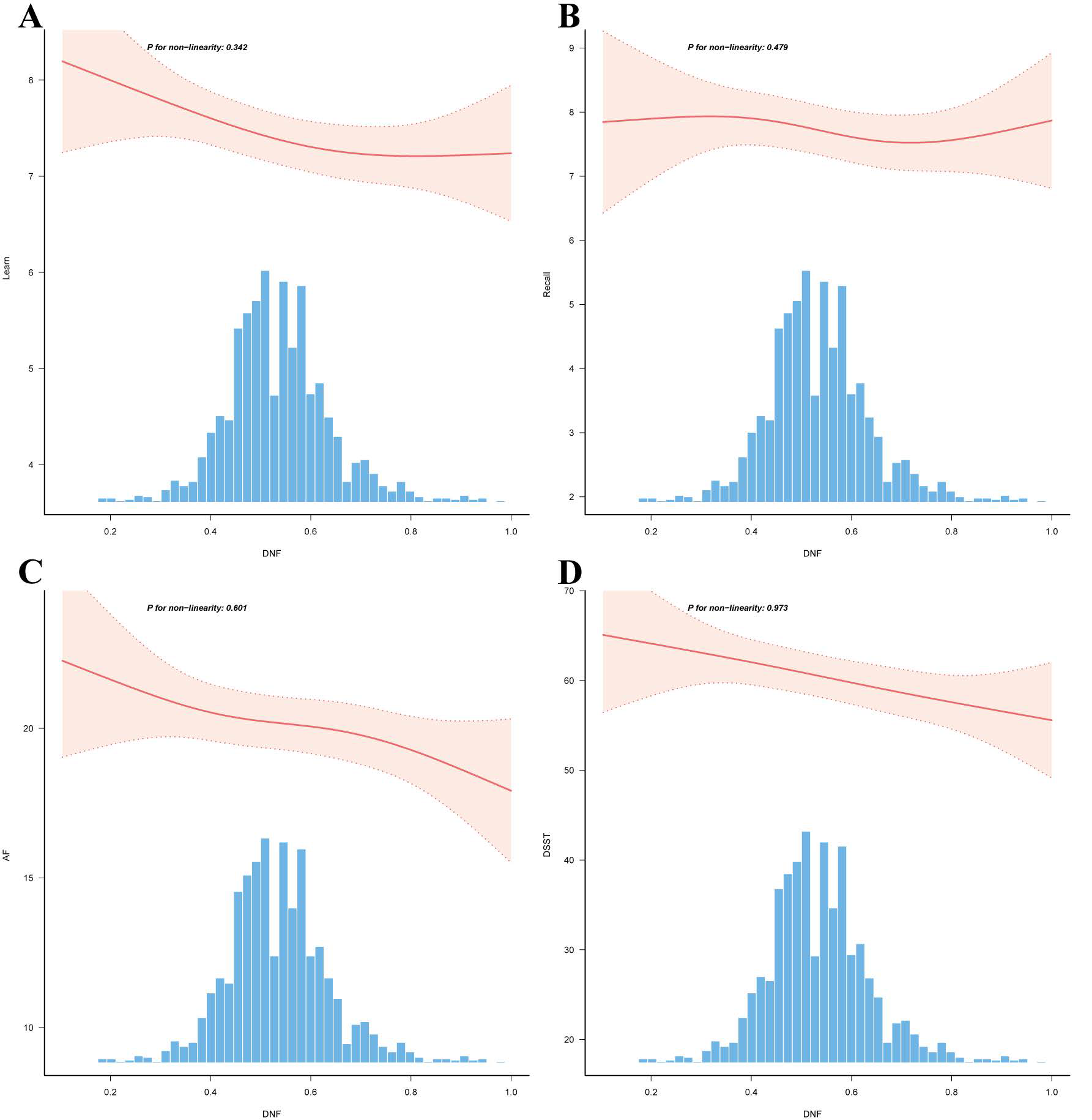
Figure 7 The inflection point analysis of curve fitting between nocturnal fasting time and cognitive function score was analyzed by weighted multi-model linear regression.
Discussion
This study aimed to assess the effect of duration of night fasting (DNF) on cognitive functions, including learning, recall, motor fluency, and Wechsler Adult Intelligence Scale scores in older adults. The study was based on the National Health and Nutrition Examination Survey (NHANES) data from 2011 to 2014 and analyzed 2179 subjects. The length of nighttime fasting was recorded through two 24-hour dietary recall interviews, and cognitive function was assessed using standardized neuropsychological tests. After adjusting for confounders, the results showed that DNF was significantly negatively correlated with cognitive function scores, and this relationship was prevalent in most subgroups.
Intermittent fasting (IF) consists of a variety of fasting patterns, including alternate-day fasting, time-limited fasting, 5:2 intermittent fasting, 16+8 hour fasting, and caloric restriction, which focuses on controlling daily calorie intake. Previous studies have shown that fasting can optimize metabolic efficiency by activating autophagy and ketone body metabolism, especially in individuals with impaired glucose metabolism has a neuroprotective effect [31] . IF can regulate the structure of intestinal flora through the gut-brain axis, increase the abundance of probiotics (such as Lactobacillus), promote the production of short-chain fatty acids (SCFAs) and neuroactive metabolites (such as 5-HT and TUDCA), and thus improve synaptic plasticity and inhibit neuroinflammation [32] . IF can significantly alleviate cognitive impairment in diabetic mice by improving insulin sensitivity and activating neuroprotective pathways (such as ERK/BDNF) by inhibiting inflammatory signaling (such as NF-κB/JNK) [33,34] . IF can also reduce the neuroinflammation induced by postoperative cognitive dysfunction (POCD) in elderly mice, thereby improving the pathological injury of hippocampus and enhancing cognitive performance [35] .
However, intermittent fasting is a double-edged sword, and functional magnetic resonance imaging (fMRI) studies have found that 14 hours of night fasting leads to physiological hypoglycemia, causing decreased activation of the bilateral dorsal midline thalamus and basal ganglia, suggesting that these brain regions are sensitive to blood sugar fluctuations [36] . Prolonged nighttime fasting (e.g., >12 hours) increases the risk of metabolic syndrome, and metabolic abnormalities (e.g., high triglycerides, insulin resistance) have been shown to be independent risk factors for cognitive decline [37] . This suggests that fasting may indirectly affect cognitive function through metabolic pathways. Studies in humans have shown that prolonged fasting (for example, more than 14 hours) can lead to a decline in short-term memory and vocabulary production, hinting at a potential effect of species differences or fasting patterns. Sustained calorie restriction will reduce processing speed and working memory, may lead to impaired cognitive flexibility, and may have serious, irreversible consequences for individuals who continue to practice calorie restriction [38] .
At present, there is still a lack of clinical studies on IF in the population, so this study from the night fasting duration as a starting point, revealed the negative correlation between night fasting duration and cognitive function in the elderly. From a physiological perspective, prolonged nighttime fasting duration may affect cognitive function through multiple mechanisms. Previous studies have shown that intermittent fasting improves insulin sensitivity and lowers blood glucose levels [39,40] , which is essential for maintaining brain health and preventing neurodegenerative diseases associated with cognitive decline [41,42] . In addition, prolonged nighttime fasting duration is associated with lower levels of inflammation and reduced circulating concentrations of inflammatory mediators such as C-reactive protein (CRP) and interleukin-6 (IL-6) [43] , which may help to reduce neuroinflammation and protect neuronal cells from damage [44,45] . Based on the fact that sex hormones such as estrogen have a modulatory role in neuroprotective and inflammatory responses, it can be explained that differences in the strength of associations observed in specific gender and age groups may be related to changes in hormone levels [46,47] . In addition, differences between ethnic groups may be related to differences in genetic background, cultural practices, or environmental factors, all of which may influence an individual's perception of the effects of nighttime fasting duration on cognitive function [48] .
The strengths of this study are the use of representative NHANES data and the use of rigorous statistical methods to control for confounders. However, there were limitations to the study: the cross-sectional design did not allow for the identification of causality, the DNF measure may have been influenced by recall bias, and other potential influences (e.g., genetic predisposition or chronic stress) were not considered.Future research incorporating prospective or longitudinal analyses is anticipated to provide further in-depth insights.
The findings support the association between DNF and cognitive decline in older adults and emphasize the potential for improving cognitive health through lifestyle interventions. Future studies must explore the mechanisms of action and differences in different populations further.
5. Conclusion
This study investigated the relationship between nighttime fasting duration and cognitive function in older adults using data from the National Health and Nutrition Examination Survey (NHANES) from 2011 to 2014. The results demonstrated a significant negative correlation between longer nighttime fasting duration and cognitive function scores, particularly in learning, recall, attention, and the Digit Symbol Replacement Test. Subgroup analyses revealed that this negative correlation was prevalent across most demographic and health-related subgroups. Curve fitting further confirmed a linear relationship between nighttime fasting duration and cognitive function scores. These findings suggest that nighttime fasting duration may be a modifiable lifestyle factor influencing cognitive health in older adults. Future research should explore the underlying mechanisms and consider longitudinal studies to establish causality.
Acknowledgements
The authors would like to acknowledge and thank all the individuals participating in NHANES 2011-2014 for their invaluable contributions.
Funding information
This study was supported by the National Natural Science Foundation of China (82471467 to RM Wang).
Competing Interests
The authors declare that they have no existing or potential commercial or financial relationships that could create a conflict of interest at the time of conducting this study.
Data Availability
All data needed to evaluate the conclusions in the paper are present in the paper or the Supplementary Materials. Additional data related to this paper may be requested from the authors.
References
[1] Prince M, Bryce R, Albanese E, Wimo A, Ribeiro W, Ferri CP. The global prevalence of dementia: a systematic review and metaanalysis. Alzheimers Dement. 2013;9(1):63-75.e2.
[2] Zhao M, Chen Z, Xu T, Fan P, Tian F. Global prevalence of polypharmacy and potentially inappropriate medication in older patients with dementia: a systematic review and meta-analysis. Front Pharmacol. 2023;14:1221069.
[3] Hebert LE, Scherr PA, Bienias JL, Bennett DA, Evans DA. Alzheimer disease in the US population: prevalence estimates using the 2000 census. Arch Neurol. 2003;60(8):1119-22.
[4] Aibar-Almazán A, Voltes-Martínez A, Castellote-Caballero Y, Afanador-Restrepo DF, Carcelén-Fraile MDC, López-Ruiz E. Current Status of the Diagnosis and Management of Osteoporosis. Int J Mol Sci. 2022;23(16).
[5] Li X, Feng X, Sun X, Hou N, Han F, Liu Y. Global, regional, and national burden of Alzheimer's disease and other dementias, 1990-2019. Front Aging Neurosci. 2022;14:937486.
[6] Chu CQ, Yu LL, Qi GY, Mi YS, Wu WQ, Lee YK, et al. Can dietary patterns prevent cognitive impairment and reduce Alzheimer's disease risk: Exploring the underlying mechanisms of effects. Neurosci Biobehav Rev. 2022;135:104556.
[7] O'Leary J, Georgeaux-Healy C, Serpell L. The impact of continuous calorie restriction and fasting on cognition in adults without eating disorders. Nutr Rev. 2024.
[8] Alkurd R, Mahrous L, Zeb F, Khan MA, Alhaj H, Khraiwesh HM, et al. Effect of Calorie Restriction and Intermittent Fasting Regimens on Brain-Derived Neurotrophic Factor Levels and Cognitive Function in Humans: A Systematic Review. Medicina (Kaunas). 2024;60(1).
[9] Hofer SJ, Carmona-Gutierrez D, Mueller MI, Madeo F. The ups and downs of caloric restriction and fasting: from molecular effects to clinical application. EMBO Mol Med. 2022;14(1):e14418.
[10] Vasim I, Majeed CN, DeBoer MD. Intermittent Fasting and Metabolic Health. Nutrients. 2022;14(3).
[11] Mattson MP, Longo VD, Harvie M. Impact of intermittent fasting on health and disease processes. Ageing Res Rev. 2017;39:46-58.
[12] Wahl D, Cogger VC, Solon-Biet SM, Waern RV, Gokarn R, Pulpitel T, et al. Nutritional strategies to optimise cognitive function in the aging brain. Ageing Res Rev. 2016;31:80-92.
[13] Anson RM, Guo Z, de Cabo R, Iyun T, Rios M, Hagepanos A, et al. Intermittent fasting dissociates beneficial effects of dietary restriction on glucose metabolism and neuronal resistance to injury from calorie intake. Proc Natl Acad Sci U S A. 2003;100(10):6216-20.
[14] Fu M, Lu S, Gong L, Zhou Y, Wei F, Duan Z, et al. Intermittent fasting shifts the diurnal transcriptome atlas of transcription factors. Mol Cell Biochem. 2024.
[15] Morris JC, Heyman A, Mohs RC, Hughes JP, van Belle G, Fillenbaum G, et al. The Consortium to Establish a Registry for Alzheimer's Disease (CERAD). Part I. Clinical and neuropsychological assessment of Alzheimer's disease. Neurology. 1989;39(9):1159-65.
[16] Lindenberger U. Human cognitive aging: corriger la fortune? Science. 2014;346(6209):572-8.
[17] Beeri MS, Schmeidler J, Sano M, Wang J, Lally R, Grossman H, et al. Age, gender, and education norms on the CERAD neuropsychological battery in the oldest old. Neurology. 2006;67(6):1006-10.
[18] Brody DJ, Kramarow EA, Taylor CA, McGuire LC. Cognitive Performance in Adults Aged 60 and Over: National Health and Nutrition Examination Survey, 2011-2014. Natl Health Stat Report. 2019(126):1-23.
[19] Jaeger J. Digit Symbol Substitution Test: The Case for Sensitivity Over Specificity in Neuropsychological Testing. J Clin Psychopharmacol. 2018;38(5):513-9.
[20] Sotaniemi M, Pulliainen V, Hokkanen L, Pirttilä T, Hallikainen I, Soininen H, et al. CERAD-neuropsychological battery in screening mild Alzheimer's disease. Acta Neurol Scand. 2012;125(1):16-23.
[21] Tang H, Zhang X, Luo N, Huang J, Zhu Y. Association of Dietary Live Microbes and Nondietary Prebiotic/Probiotic Intake With Cognitive Function in Older Adults: Evidence From NHANES. J Gerontol A Biol Sci Med Sci. 2024;79(2).
[22] Chen L, Zou L, Chen J, Wang Y, Liu D, Yin L, et al. Association between cognitive function and body composition in older adults: data from NHANES (1999-2002). Front Aging Neurosci. 2024;16:1372583.
[23] Wilson RS, Mendes De Leon CF, Barnes LL, Schneider JA, Bienias JL, Evans DA, et al. Participation in cognitively stimulating activities and risk of incident Alzheimer disease. Jama. 2002;287(6):742-8.
[24] Mao J, Hu H, Zhao Y, Zhou M, Yang X. Association Between Composite Dietary Antioxidant Index and Cognitive Function Among Aging Americans from NHANES 2011-2014. J Alzheimers Dis. 2024;98(4):1377-89.
[25] St-Onge MP, Ard J, Baskin ML, Chiuve SE, Johnson HM, Kris-Etherton P, et al. Meal Timing and Frequency: Implications for Cardiovascular Disease Prevention: A Scientific Statement From the American Heart Association. Circulation. 2017;135(9):e96-e121.
[26] Cheng W, Meng X, Gao J, Jiang W, Sun X, Li Y, et al. Relationship between circadian eating behavior (daily eating frequency and nighttime fasting duration) and cardiovascular mortality. Int J Behav Nutr Phys Act. 2024;21(1):22.
[27] Makarem N, Sears DD, St-Onge MP, Zuraikat FM, Gallo LC, Talavera GA, et al. Habitual Nightly Fasting Duration, Eating Timing, and Eating Frequency are Associated with Cardiometabolic Risk in Women. Nutrients. 2020;12(10).
[28] Rahman HH, Niemann D, Munson-McGee SH. Association of albumin to creatinine ratio with urinary arsenic and metal exposure: evidence from NHANES 2015-2016. Int Urol Nephrol. 2022;54(6):1343-53.
[29] Arı E, Köseoğlu H, Eroğlu T. Predictive value of SIRI and SII for metastases in RCC: a prospective clinical study. BMC Urol. 2024;24(1):14.
[30] Zhang H, Liu X, Wang X, Jiang Y. Association of two novel systemic inflammatory biomarkers and frailty based on NHANES 2007-2018. Front Public Health. 2024;12:1377408.
[31] Gudden J, Arias Vasquez A, Bloemendaal M. The Effects of Intermittent Fasting on Brain and Cognitive Function. Nutrients. 2021;13(9).
[32] Serger E, Luengo-Gutierrez L, Chadwick JS, Kong G, Zhou L, Crawford G, et al. The gut metabolite indole-3 propionate promotes nerve regeneration and repair. Nature. 2022;607(7919):585-92.
[33] Wang Y, Liang J, Xu B, Yang J, Wu Z, Cheng L. TrkB/BDNF signaling pathway and its small molecular agonists in CNS injury. Life sciences. 2024;336:122282.
[34] Li ST, Dai Q, Zhang SX, Liu YJ, Yu QQ, Tan F, et al. Ulinastatin attenuates LPS-induced inflammation in mouse macrophage RAW264.7 cells by inhibiting the JNK/NF-κB signaling pathway and activating the PI3K/Akt/Nrf2 pathway. Acta pharmacologica Sinica. 2018;39(8):1294-304.
[35] Wang L, Wang Q, Wang X, Yang C, Wang X, Liu H, et al. Intermittent fasting alleviates postoperative cognitive dysfunction by reducing neuroinflammation in aged mice. Brain research bulletin. 2024;216:111034.
[36] Chechko N, Vocke S, Habel U, Toygar T, Kuckartz L, Berthold-Losleben M, et al. Effects of overnight fasting on working memory-related brain network: an fMRI study. Human brain mapping. 2015;36(3):839-51.
[37] Ha K, Song Y. Associations of Meal Timing and Frequency with Obesity and Metabolic Syndrome among Korean Adults. Nutrients. 2019;11(10).
[38] Wang J, Rang Y, Liu C. Effects of Caloric Restriction and Intermittent Fasting and Their Combined Exercise on Cognitive Functioning: A Review. Current nutrition reports. 2024;13(4):691-700.
[39] Farese RV, Kindy MA, Sajan MP. Atypical Protein Kinase C Hyperactivity in Insulin-Resistant and Insulin-Sensitive Forms of Alzheimer’s Disease: A Potential Therapeutic Target. In: Huang X, editor. Alzheimer’s Disease: Drug Discovery. Brisbane (AU): Exon Publications; 2020.
[40] Cerqueira FM, da Cunha FM, Caldeira da Silva CC, Chausse B, Romano RL, Garcia CC, et al. Long-term intermittent feeding, but not caloric restriction, leads to redox imbalance, insulin receptor nitration, and glucose intolerance. Free Radic Biol Med. 2011;51(7):1454-60.
[41] Chen W, Cai W, Hoover B, Kahn CR. Insulin action in the brain: cell types, circuits, and diseases. Trends Neurosci. 2022;45(5):384-400.
[42] Hamzé R, Delangre E, Tolu S, Moreau M, Janel N, Bailbé D, et al. Type 2 Diabetes Mellitus and Alzheimer's Disease: Shared Molecular Mechanisms and Potential Common Therapeutic Targets. Int J Mol Sci. 2022;23(23).
[43] Fontana L, Meyer TE, Klein S, Holloszy JO. Long-term calorie restriction is highly effective in reducing the risk for atherosclerosis in humans. Proc Natl Acad Sci U S A. 2004;101(17):6659-63.
[44] McGrattan AM, McGuinness B, McKinley MC, Kee F, Passmore P, Woodside JV, et al. Diet and Inflammation in Cognitive Ageing and Alzheimer's Disease. Curr Nutr Rep. 2019;8(2):53-65.
[45] Tan BL, Norhaizan ME. Effect of High-Fat Diets on Oxidative Stress, Cellular Inflammatory Response and Cognitive Function. Nutrients. 2019;11(11).
[46] Furtado A, Costa D, Lemos MC, Cavaco JE, Santos CRA, Quintela T. The impact of biological clock and sex hormones on the risk of disease. Adv Protein Chem Struct Biol. 2023;137:39-81.
[47] Shelly S, Ramon-Gonen R, Paul P, Klein CJ, Klang E, Rahman N, et al. Nerve Conduction Differences in a Large Clinical Population: The Role of Age and Sex. J Neuromuscul Dis. 2023;10(5):925-35.
[48] Harriden B, D'Cunha NM, Kellett J, Isbel S, Panagiotakos DB, Naumovski N. Are dietary patterns becoming more processed? The effects of different dietary patterns on cognition: A review. Nutr Health. 2022;28(3):341-56.
 Figures
 References
 Peer
Peer Information
Figure 1. The flow chart of participant selection.
Figure 2. Correlation and Scatterplot Matrix of Key Variables.
Figure 3. Primary analysis forest map.
Figure 4. 3D distribution diagram.
Figure 5. Subgroup analysis forest plot.
Figure 6. Employed weighted multi-model linear regression to analyze the curve fitting between nighttime fasting duration and cognitive function scores.(A)Curve fitting of DNF with learning scores. (B) Curve fitting of DNF with recall scores. (C) Curve fitting of DNF with Animal Fluency. (D) Curve fitting of DNF with Digit Symbol Substitution test.
Figure 7. The inflection point analysis of curve fitting between nocturnal fasting time and cognitive function score was analyzed by weighted multi-model linear regression.
[1] Prince M, Bryce R, Albanese E, Wimo A, Ribeiro W, Ferri CP. The global prevalence of dementia: a systematic review and metaanalysis. Alzheimers Dement. 2013;9(1):63-75.e2.
[2] Zhao M, Chen Z, Xu T, Fan P, Tian F. Global prevalence of polypharmacy and potentially inappropriate medication in older patients with dementia: a systematic review and meta-analysis. Front Pharmacol. 2023;14:1221069.
[3] Hebert LE, Scherr PA, Bienias JL, Bennett DA, Evans DA. Alzheimer disease in the US population: prevalence estimates using the 2000 census. Arch Neurol. 2003;60(8):1119-22.
[4] Aibar-Almazán A, Voltes-Martínez A, Castellote-Caballero Y, Afanador-Restrepo DF, Carcelén-Fraile MDC, López-Ruiz E. Current Status of the Diagnosis and Management of Osteoporosis. Int J Mol Sci. 2022;23(16).
[5] Li X, Feng X, Sun X, Hou N, Han F, Liu Y. Global, regional, and national burden of Alzheimer's disease and other dementias, 1990-2019. Front Aging Neurosci. 2022;14:937486.
[6] Chu CQ, Yu LL, Qi GY, Mi YS, Wu WQ, Lee YK, et al. Can dietary patterns prevent cognitive impairment and reduce Alzheimer's disease risk: Exploring the underlying mechanisms of effects. Neurosci Biobehav Rev. 2022;135:104556.
[7] O'Leary J, Georgeaux-Healy C, Serpell L. The impact of continuous calorie restriction and fasting on cognition in adults without eating disorders. Nutr Rev. 2024.
[8] Alkurd R, Mahrous L, Zeb F, Khan MA, Alhaj H, Khraiwesh HM, et al. Effect of Calorie Restriction and Intermittent Fasting Regimens on Brain-Derived Neurotrophic Factor Levels and Cognitive Function in Humans: A Systematic Review. Medicina (Kaunas). 2024;60(1).
[9] Hofer SJ, Carmona-Gutierrez D, Mueller MI, Madeo F. The ups and downs of caloric restriction and fasting: from molecular effects to clinical application. EMBO Mol Med. 2022;14(1):e14418.
[10] Vasim I, Majeed CN, DeBoer MD. Intermittent Fasting and Metabolic Health. Nutrients. 2022;14(3).
[11] Mattson MP, Longo VD, Harvie M. Impact of intermittent fasting on health and disease processes. Ageing Res Rev. 2017;39:46-58.
[12] Wahl D, Cogger VC, Solon-Biet SM, Waern RV, Gokarn R, Pulpitel T, et al. Nutritional strategies to optimise cognitive function in the aging brain. Ageing Res Rev. 2016;31:80-92.
[13] Anson RM, Guo Z, de Cabo R, Iyun T, Rios M, Hagepanos A, et al. Intermittent fasting dissociates beneficial effects of dietary restriction on glucose metabolism and neuronal resistance to injury from calorie intake. Proc Natl Acad Sci U S A. 2003;100(10):6216-20.
[14] Fu M, Lu S, Gong L, Zhou Y, Wei F, Duan Z, et al. Intermittent fasting shifts the diurnal transcriptome atlas of transcription factors. Mol Cell Biochem. 2024.
[15] Morris JC, Heyman A, Mohs RC, Hughes JP, van Belle G, Fillenbaum G, et al. The Consortium to Establish a Registry for Alzheimer's Disease (CERAD). Part I. Clinical and neuropsychological assessment of Alzheimer's disease. Neurology. 1989;39(9):1159-65.
[16] Lindenberger U. Human cognitive aging: corriger la fortune? Science. 2014;346(6209):572-8.
[17] Beeri MS, Schmeidler J, Sano M, Wang J, Lally R, Grossman H, et al. Age, gender, and education norms on the CERAD neuropsychological battery in the oldest old. Neurology. 2006;67(6):1006-10.
[18] Brody DJ, Kramarow EA, Taylor CA, McGuire LC. Cognitive Performance in Adults Aged 60 and Over: National Health and Nutrition Examination Survey, 2011-2014. Natl Health Stat Report. 2019(126):1-23.
[19] Jaeger J. Digit Symbol Substitution Test: The Case for Sensitivity Over Specificity in Neuropsychological Testing. J Clin Psychopharmacol. 2018;38(5):513-9.
[20] Sotaniemi M, Pulliainen V, Hokkanen L, Pirttilä T, Hallikainen I, Soininen H, et al. CERAD-neuropsychological battery in screening mild Alzheimer's disease. Acta Neurol Scand. 2012;125(1):16-23.
[21] Tang H, Zhang X, Luo N, Huang J, Zhu Y. Association of Dietary Live Microbes and Nondietary Prebiotic/Probiotic Intake With Cognitive Function in Older Adults: Evidence From NHANES. J Gerontol A Biol Sci Med Sci. 2024;79(2).
[22] Chen L, Zou L, Chen J, Wang Y, Liu D, Yin L, et al. Association between cognitive function and body composition in older adults: data from NHANES (1999-2002). Front Aging Neurosci. 2024;16:1372583.
[23] Wilson RS, Mendes De Leon CF, Barnes LL, Schneider JA, Bienias JL, Evans DA, et al. Participation in cognitively stimulating activities and risk of incident Alzheimer disease. Jama. 2002;287(6):742-8.
[24] Mao J, Hu H, Zhao Y, Zhou M, Yang X. Association Between Composite Dietary Antioxidant Index and Cognitive Function Among Aging Americans from NHANES 2011-2014. J Alzheimers Dis. 2024;98(4):1377-89.
[25] St-Onge MP, Ard J, Baskin ML, Chiuve SE, Johnson HM, Kris-Etherton P, et al. Meal Timing and Frequency: Implications for Cardiovascular Disease Prevention: A Scientific Statement From the American Heart Association. Circulation. 2017;135(9):e96-e121.
[26] Cheng W, Meng X, Gao J, Jiang W, Sun X, Li Y, et al. Relationship between circadian eating behavior (daily eating frequency and nighttime fasting duration) and cardiovascular mortality. Int J Behav Nutr Phys Act. 2024;21(1):22.
[27] Makarem N, Sears DD, St-Onge MP, Zuraikat FM, Gallo LC, Talavera GA, et al. Habitual Nightly Fasting Duration, Eating Timing, and Eating Frequency are Associated with Cardiometabolic Risk in Women. Nutrients. 2020;12(10).
[28] Rahman HH, Niemann D, Munson-McGee SH. Association of albumin to creatinine ratio with urinary arsenic and metal exposure: evidence from NHANES 2015-2016. Int Urol Nephrol. 2022;54(6):1343-53.
[29] Arı E, Köseoğlu H, Eroğlu T. Predictive value of SIRI and SII for metastases in RCC: a prospective clinical study. BMC Urol. 2024;24(1):14.
[30] Zhang H, Liu X, Wang X, Jiang Y. Association of two novel systemic inflammatory biomarkers and frailty based on NHANES 2007-2018. Front Public Health. 2024;12:1377408.
[31] Gudden J, Arias Vasquez A, Bloemendaal M. The Effects of Intermittent Fasting on Brain and Cognitive Function. Nutrients. 2021;13(9).
[32] Serger E, Luengo-Gutierrez L, Chadwick JS, Kong G, Zhou L, Crawford G, et al. The gut metabolite indole-3 propionate promotes nerve regeneration and repair. Nature. 2022;607(7919):585-92.
[33] Wang Y, Liang J, Xu B, Yang J, Wu Z, Cheng L. TrkB/BDNF signaling pathway and its small molecular agonists in CNS injury. Life sciences. 2024;336:122282.
[34] Li ST, Dai Q, Zhang SX, Liu YJ, Yu QQ, Tan F, et al. Ulinastatin attenuates LPS-induced inflammation in mouse macrophage RAW264.7 cells by inhibiting the JNK/NF-κB signaling pathway and activating the PI3K/Akt/Nrf2 pathway. Acta pharmacologica Sinica. 2018;39(8):1294-304.
[35] Wang L, Wang Q, Wang X, Yang C, Wang X, Liu H, et al. Intermittent fasting alleviates postoperative cognitive dysfunction by reducing neuroinflammation in aged mice. Brain research bulletin. 2024;216:111034.
[36] Chechko N, Vocke S, Habel U, Toygar T, Kuckartz L, Berthold-Losleben M, et al. Effects of overnight fasting on working memory-related brain network: an fMRI study. Human brain mapping. 2015;36(3):839-51.
[37] Ha K, Song Y. Associations of Meal Timing and Frequency with Obesity and Metabolic Syndrome among Korean Adults. Nutrients. 2019;11(10).
[38] Wang J, Rang Y, Liu C. Effects of Caloric Restriction and Intermittent Fasting and Their Combined Exercise on Cognitive Functioning: A Review. Current nutrition reports. 2024;13(4):691-700.
[39] Farese RV, Kindy MA, Sajan MP. Atypical Protein Kinase C Hyperactivity in Insulin-Resistant and Insulin-Sensitive Forms of Alzheimer’s Disease: A Potential Therapeutic Target. In: Huang X, editor. Alzheimer’s Disease: Drug Discovery. Brisbane (AU): Exon Publications; 2020.
[40] Cerqueira FM, da Cunha FM, Caldeira da Silva CC, Chausse B, Romano RL, Garcia CC, et al. Long-term intermittent feeding, but not caloric restriction, leads to redox imbalance, insulin receptor nitration, and glucose intolerance. Free Radic Biol Med. 2011;51(7):1454-60.
[41] Chen W, Cai W, Hoover B, Kahn CR. Insulin action in the brain: cell types, circuits, and diseases. Trends Neurosci. 2022;45(5):384-400.
[42] Hamzé R, Delangre E, Tolu S, Moreau M, Janel N, Bailbé D, et al. Type 2 Diabetes Mellitus and Alzheimer's Disease: Shared Molecular Mechanisms and Potential Common Therapeutic Targets. Int J Mol Sci. 2022;23(23).
[43] Fontana L, Meyer TE, Klein S, Holloszy JO. Long-term calorie restriction is highly effective in reducing the risk for atherosclerosis in humans. Proc Natl Acad Sci U S A. 2004;101(17):6659-63.
[44] McGrattan AM, McGuinness B, McKinley MC, Kee F, Passmore P, Woodside JV, et al. Diet and Inflammation in Cognitive Ageing and Alzheimer's Disease. Curr Nutr Rep. 2019;8(2):53-65.
[45] Tan BL, Norhaizan ME. Effect of High-Fat Diets on Oxidative Stress, Cellular Inflammatory Response and Cognitive Function. Nutrients. 2019;11(11).
[46] Furtado A, Costa D, Lemos MC, Cavaco JE, Santos CRA, Quintela T. The impact of biological clock and sex hormones on the risk of disease. Adv Protein Chem Struct Biol. 2023;137:39-81.
[47] Shelly S, Ramon-Gonen R, Paul P, Klein CJ, Klang E, Rahman N, et al. Nerve Conduction Differences in a Large Clinical Population: The Role of Age and Sex. J Neuromuscul Dis. 2023;10(5):925-35.
[48] Harriden B, D'Cunha NM, Kellett J, Isbel S, Panagiotakos DB, Naumovski N. Are dietary patterns becoming more processed? The effects of different dietary patterns on cognition: A review. Nutr Health. 2022;28(3):341-56.
Peer-review Terminology
Identity transparency: Single anonymized
Reviewer interacts with: Editor
Details
This is an open access article under the terms of the Creative Commons Attribution License(http://creativecommons.org/licenses/by/4.0/), which permits use, distribution and reproduction in any medium, provided the original work is properly cited.
Publication History
Received 2025-01-20
Accepted 2025-03-16
Published 2025-03-30