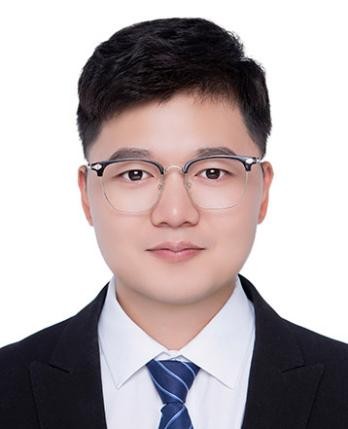
Chenlu Zhu
- M.D./Ph.D.
- Cerebral Atherosclerosis and Migraine Researcher
- zhuchl20@163.com
- First Affiliated Hospital of Shandong First Medical University
Research Field
- Pathogenesis of Cerebral Atherosclerosis and Migraine
- Advanced Techniques for Investigating Brain Diseases
- Identification of New Clinical Treatment Targets
Biography
Dr. Chenlu Zhu is a dedicated researcher specializing in the clinical and fundamental mechanism research of cerebral atherosclerosis and migraine at the First Affiliated Hospital of Shandong First Medical University. His work aims to elucidate the pathogenesis of these conditions by integrating clinical data with basic animal experiments, providing important insights into their diagnosis and treatment.
He is proficient in identifying clinical problems and exploring answers through advanced techniques such as mouse behavioral analysis, two-photon microscopy, animal MRI experiments and analysis, electrophysiology, optogenetics, and chemogenetics, to investigate the neural circuits involved in brain diseases. Dr. Zhu has published more than 20 high-impact research articles as a first author and co-author in well-known international and domestic journals, with a cumulative impact factor exceeding 40.
Active in the academic community, Dr. Zhu has participated in numerous conferences, submitting papers and engaging in scholarly communication. He holds various academic positions, including young editorial board member of Medicine Advances, editorial board member of Chinese Journal of Neurosurgical Disease Research, editorial board member of Life Conflux, associate editor of Brain Conflux, and invited reviewer for several international journals such as Neural Regeneration Research, Scientific Reports, Frontiers in Neurology, Science Development, and SN Comprehensive Clinical Medicine.
Dr. Zhu's ongoing work continues to drive the development of neuroscience research at the First Affiliated Hospital of Shandong First Medical University. His ultimate goal is to clarify the pathogenesis of cerebral atherosclerosis and migraine and identify new targets for clinical treatment.
Author Services
Online via OJS platform
Single-anonymous, ~4–6 weeks
Open access, DOI assigned
Journal Metrics
Impact factors & citation analysis
Journal Information
Journal Sections
Journal Policies



Published under CC BY 4.0. Authors retain copyright. Ethics governed by COPE guidelines. DOIs registered via Crossref. Publication Ethics →